The Benefits of CRM in the Indian Real Estate Industry

The Indian real estate industry The software helps is moving faster than ever. Buyers are better informed, competition is stronger, and response time can make the difference between winning a deal and losing it. In this kind of market, relying on spreadsheets, scattered phone notes, and manual follow-ups is no longer enough. That is exactly why the crm in the real estate industry has become such a valuable business tool.
An excellent real estate CRM enables teams to manage leads, track conversations, schedule follow-ups, and nurture relationships with customers without complicating the daily work of the business. Whether you’re a developer, broker, channel partner, or property consultant, the benefits of CRM in real estate are difficult to miss
What is CRM? And what does it mean for Real Estate?
CRM (Customer Relationship Management). Put simply, it is a tool that enables a business to collect customer data, monitor interactions, and oversee the sales process all under one roof. It is particularly beneficial for real estate agents and buyers who typically spend months visiting several sites. They compare projects, raise dozens of queries, go to sites more than once, and possibly need a number of follow-ups before they get loy receive dozens of calls after submitting one inquiry. If your team responds late locked in.

That is where the crm in real estate industry creates real value. It gives sales teams a clear view of each lead’s status, preferences, budget, location interest, and previous communication. Instead of guessing who needs a callback, the team knows exactly when and how to engage.
Why CRM Matters in the Indian Real Estate Industry
The Indian real estate industry is unique because it depends heavily on trust, timing, and personal communication. A buyer looking for a home in Mumbai, Pune, Delhi, or Bengaluru mar forgets to follow up, the lead often disappears. Customers who feel recognized and appreciated are also more likely to continue the conversation and get closer to making a purchase.
Real estate firms in India, too, are bombarded with bulk queries from property portals, websites, social media, on referrals, walk-ins, and WhatsApp. A CRM tucks all these channels in one place, and the procedure gets slick and organized.
Benefits of CRM in Real Estate
The Benefits of CRM in real estate are much more than just being able to store leads. It makes for a more efficient entire sales cycle.
- Lead management is simplified as everything is in one platform for every query.
- Follow-ups are more timely, so less potential is wasted.
- Customers' data remains organized and accessible.
These are modest improvements, but in a fight-to-the-death market, they're a lethal advantage. The more structured your process is, the better your chances of converting interest into actual bookings.
Advantages of Customer Relationship Management
The advantages of customer relationship management are especially visible when a business handles large numbers of leads or multiple projects. A CRM greatly contributes to communication between teams.
Say a buyer has expressed interest in a 2BHK apartment near a metro corridor, the CRM in real estate can capture that piece of information and assist the sales executive in sending only the most pertinent project updates. It’s a time-saver for the business and the customer alike.
Other benefits of customer relationship management are:
- Improved synchronization of sales, marketing , and operations teams.
- Simplified access to the history of customers and their preferences.
- More professional communication in all stages of the sales journey.
- Increased accountability of team members.
- More informed decisions with reports and analytics.
The Benefits of Marketing with CRM
When thinking about CRM, people consider sales only. That’s the challenge, but the advantages of CRM for marketing are great. In real estate, marketing is not just about leads. And it’s also about knowing which campaigns are bringing the right audience, and how long you want to keep those leads until they’re ready to buy.
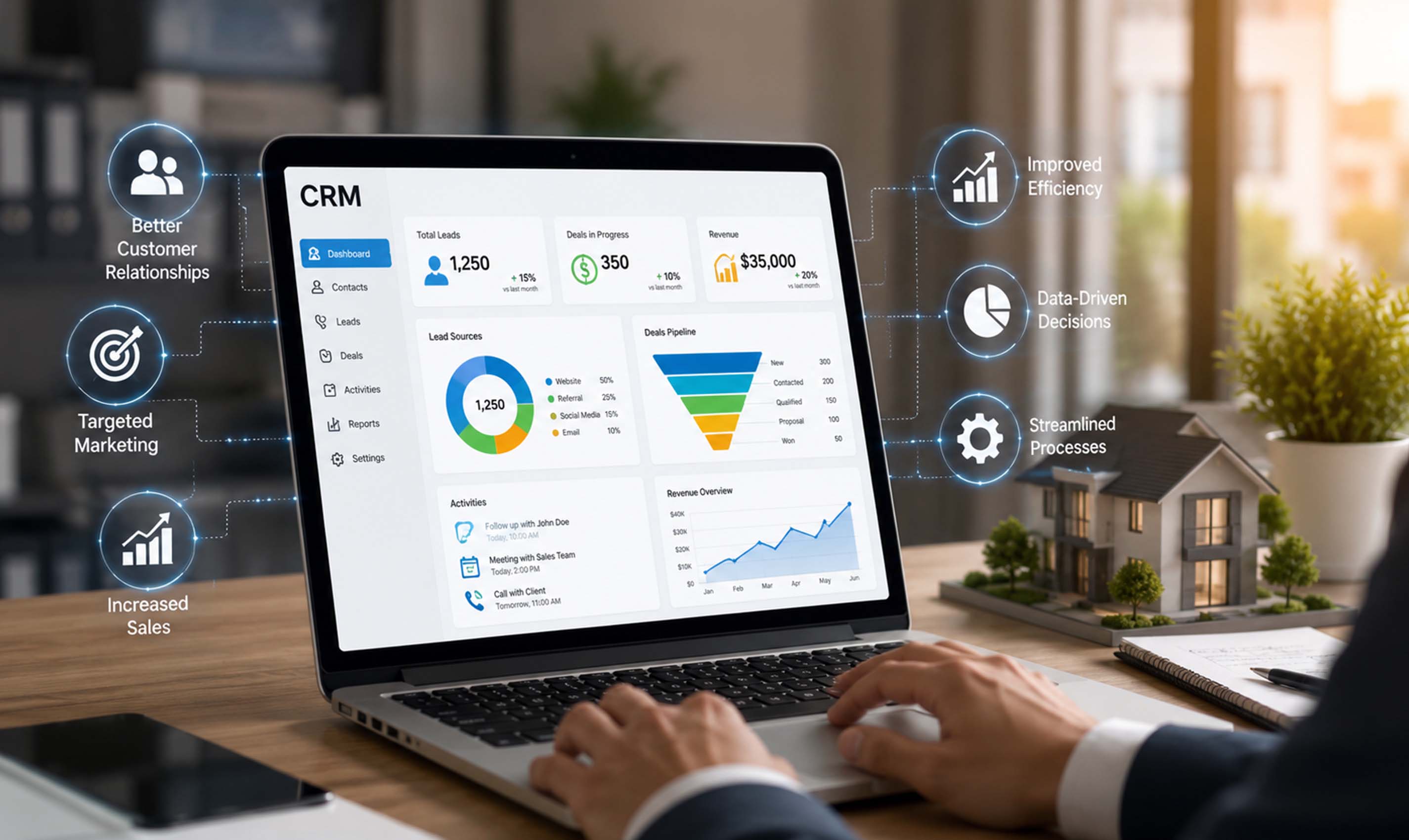
A CRM enables marketing teams to see where leads came from, which ads are performing the best, and what types of buyers are responding to a campaign. That makes it easier to refine targeting and avoid spending money on low-quality traffic.
Few advantages of CRM in marketing are:
- Lead segmentation by interest, location, and budget.
- Marketing emails and WhatsApp campaigns performed better.
- New and improved Follow Up Strategies for Warm and Cold Prospects!
- More accurate tracking of marketing ROI.
- Better retargeted ads based on customers’ behavior.
- Smarter re-marketing based on customer behaviour.
How CRM Improves Customer Experience
One of the most important benefits of customer relations is improved customer experience. Real estate is a high-involvement purchase. Customer wants fast answers, constant communication, and assurance that the company understands their needs. CRM makes that possible.
When a sales executive can see the full history of a customer’s inquiry, they do not have to ask the same questions repeatedly. They can pick up the conversation naturally and continue building trust. That small difference creates a much better impression. This is also where the advantages of customer relationship management become visible in day-to-day interactions.
CRM and Sales Performance
In the crm in real estate industry, sales performance improves because the team works with more clarity. No lead is left untracked, no callback is forgotten, and no opportunity slips through the cracks simply because someone was too busy.CRMs also help sales managers see which agents are active, which leads are moving forward, and where the bottlenecks are. This visibility allows faster action. If a lead has been sitting too long without a follow-up, the manager can step in immediately.
This level of control leads to better conversions. That is one of the most practical benefits of CRM in real estate it turns a scattered sales process into a measurable system.
CRM Supports Long-Term Growth
Real estate businesses do not grow well on memory alone. With the growing size of the team and the increasing number of projects, it gets harder to manage everything by hand. CRM provides the framework for long-term growth. That is why many growing firms in the Indian real estate industry are making CRM a core part of their business model.
Real Estate Marketing Becomes Smarter
The benefits of CRM in marketing also translate into long-term brand building. When companies have a better knowledge of their audience, they can design more powerful campaigns. Rather than trying to sell every product to all customers, they can target a specific audience with a particular product and the right message.
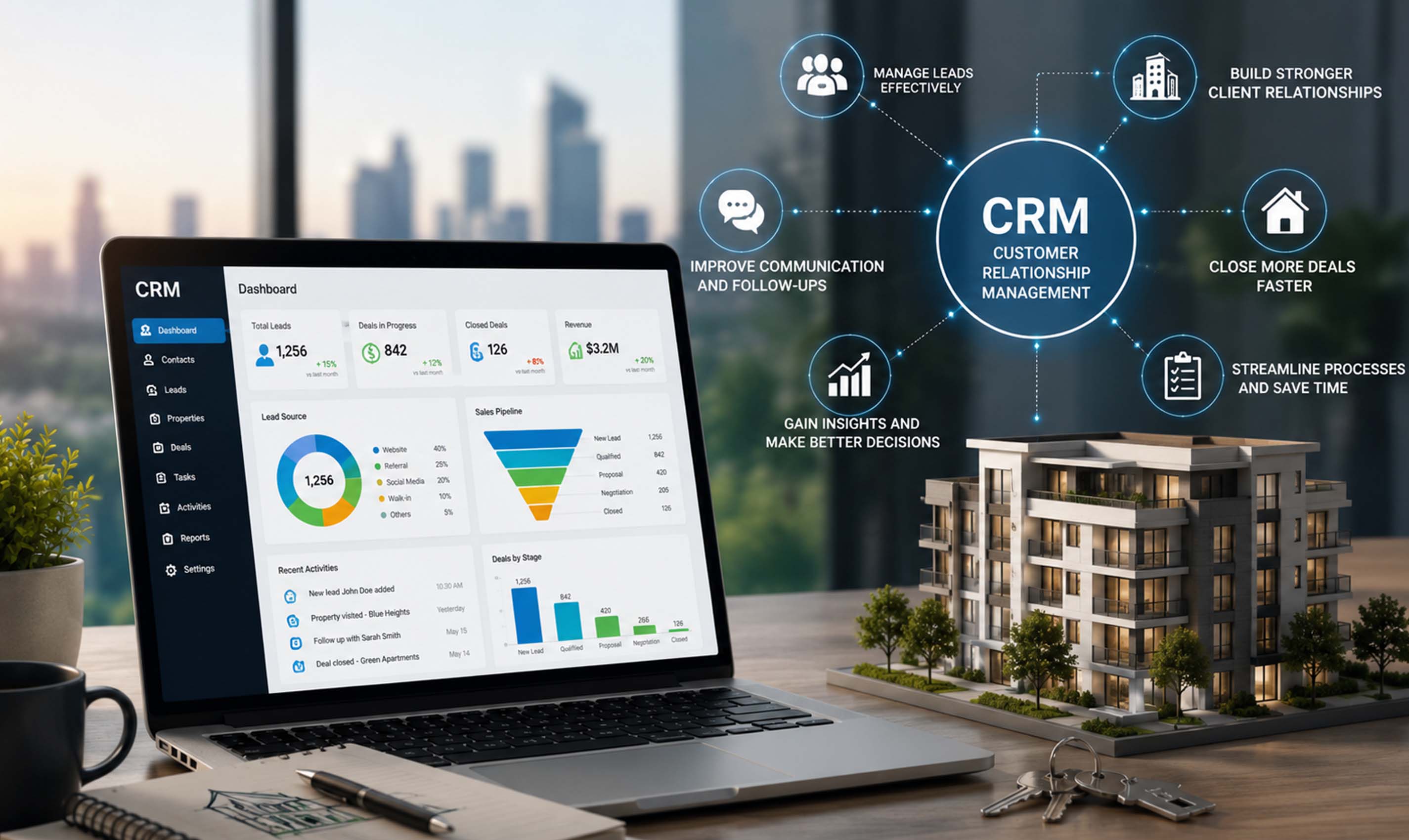
To illustrate, perhaps the messaging to new buyers for a 1st-time homebuyer needs to be focused on affordability and financing assistance, and messaging to luxury buyers might be more effective if it’s lifestyle-related. CRM enables you to recognize these trends and tailor your communication segments.
Humanizing the Sales Process
Many real estate businesses talk about automation, but the real goal is not to replace human connection. The goal is to support it. CRM makes teams more human by enabling them to keep organized, respond thoughtfully, and retain play important details.
That is one of the most overlooked benefits of customer relations. People do not want robotic conversations. They want to feel understood. A CRM provides sales teams with the information they need to communicate with empathy and confidence.
Conclusion
The Indian real estate companies were found to be more capable in handling growth, competition, and increasing demands of buyers using crm in the volatile Indian real estate market. The advantages of CRM in marketing also allow campaigns to be more intelligent and efficient, and the general consumer relations benefits create a level of trust that goes beyond a single transaction. So if you are looking to grow in the crm in real estate industry, this is the time to get the right system for your company.
Tags